


Testing the operational capability and overall effectiveness of a building’s emergency lighting system is of critical importance. Our commercial electrician team provides comprehensive emergency lighting testing to ensure your systems meet all safety standards and regulatory requirements.
Ensuring they meet safety standards, all businesses in the UK are required by law to have emergency lighting installed.
This includes:
Providing a safe environment, emergency lighting must be fully functioning at all times, and it must be tested on a regular basis to ensure this functionality.

Checking emergency lighting thoroughly goes beyond turning the lights on and off once per month to ensure they’re operational (although this must be done too).
Thorough testing involves a comprehensive inspection carried out by an independent qualified engineer, at least once per year.
As part of this testing, you will require an emergency light test key in order to manage the switches on the systems of the emergency lights. This is required to allow our engineers to simulate a power failure and check that emergency lights kick into action accordingly.
This test key for emergency lighting is vital for commercial premises and allows building managers and maintenance engineers to remain compliant with regulations.
Checking emergency lighting thoroughly goes beyond turning the lights on and off once per month to ensure they’re operational (although this must be done too).
Thorough testing involves a comprehensive inspection carried out by an independent qualified engineer, at least once per year.
As part of this testing, you will require an emergency light test key in order to manage the switches on the systems of the emergency lights. This is required to allow our engineers to simulate a power failure and check that emergency lights kick into action accordingly.
This test key for emergency lighting is vital for commercial premises and allows building managers and maintenance engineers to remain compliant with regulations.
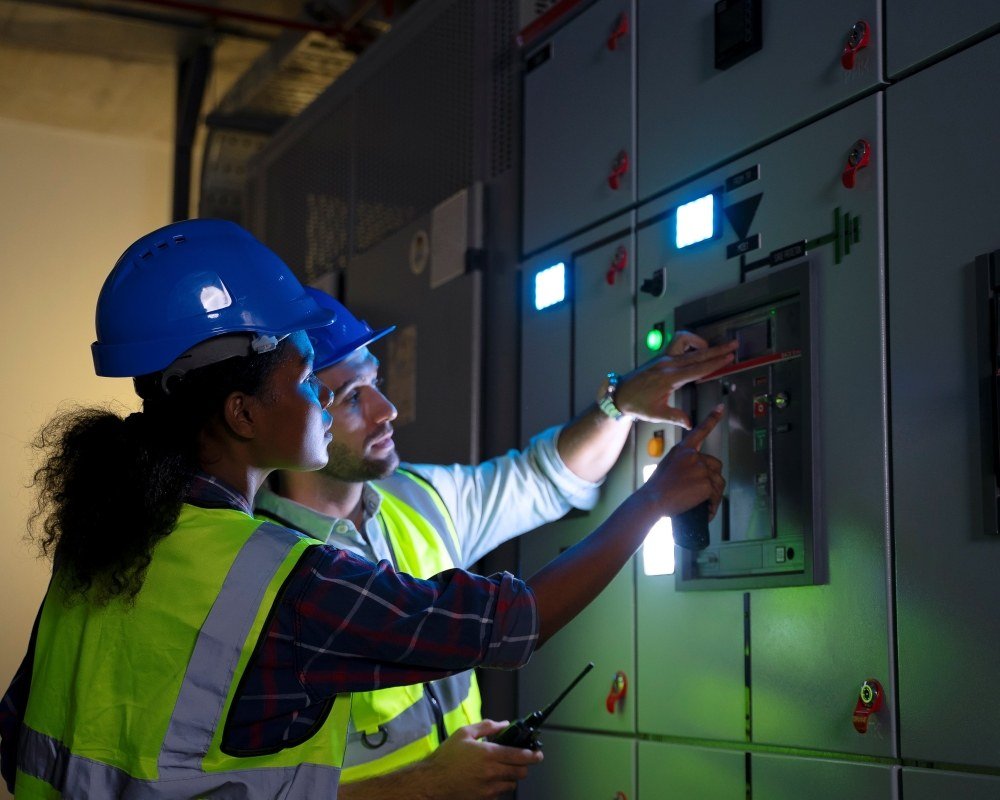
Emergency lighting is typically found in areas that are considered high risk, or placed at points of emphasis, for example, stairways, hallways, toilets, etc.
All fire exit signs must also be illuminated for safety reasons and to be able to guide people to areas of safety, and these must be placed at various points throughout a building.
This is the criticality of emergency lighting.
Helping to ensure the safe and timely evacuation of people within a building during an emergency.
Emergency lighting can help to prevent panic, allow people to locate essential items such as fire extinguishers, and allow for emergency services to reach people safely and efficiently.
Contact us to find out more.
Benefits of testing
Our team is pleased to provide all of our customers with a comprehensive light testing solution.
We understand that it is essential for businesses to meet all health and safety regulations, and we also know that keeping your employees and building occupants safe is crucial.
That’s why we conduct regular testing and emergency light maintenance on your building’s systems, ensuring that everything is not only working as it should be, but it is performing at its optimum levels.
Providing illumination in the event of mains power failure and power outages, emergency lighting is critical in buildings, and it is the responsibility of building managers, landlords, or maintenance managers to ensure that all exit routes are appropriately illuminated and have the correct signage in place.
You will also need an appropriate lighting test certificate to show that the systems you have in place are working properly.
Book your testing with our team today.
To ensure compliance with all safety and electricity regulations, you will need a competent and qualified person to carry out emergency lighting maintenance.
These inspections will typically involve an examination of all emergency signage, checking for any signs of damage, fixing these, changing, and maintaining them.
The electrical light inspection assessment consists of checking the lighting circuits and ensuring proper and appropriate shutdown procedures are in place.
1- and 3-hour tests should be carried out during the testing procedure.
As part of the lighting inspection, we will check all intersections of corridors, emergency exits, escape routes, stairways, fire extinguishers, fire alarm call points, areas greater than 60m2, and more.
Note: All equipment must be shut down in an emergency.
Once testing is complete, you will receive a pass or fail certificate. Any defects or recommendations will be noted, and at B-Engineering, our team will be able to help you rectify any issues.
We record all our findings and record these in your logbook, providing you with all documentation.
Our engineers are professional in the services we provide; we’re quick and efficient, causing minimal disruption. We test all types of emergency lighting, and our approved engineers are on hand to replace batteries and bulbs as required, helping you to meet all legal requirements.
Contact us today to find out more and to see how we can help you.
The proper installation of emergency lighting will include taking into account the design of the building, whether the building is for commercial or residential use, the type of commercial property, and if the building will be occupied, and how often.
It is a legal requirement for businesses and commercial premises to test all emergency lighting systems annually. We would also recommend that brief testing and checking of batteries be carried out monthly.
Cost is based on the size of the premises and building, the number of lights to be tested, and the frequency of testing that is required.
We customise our testing to your needs. Which means we listen. We listen to what you want, what you need, and what keeps you compliant, and we tailor our service to you. We also adhere to all safety guidelines and meeting regulations suited to your industry.